
So you’ve brought home a new puppy, how exciting! It’s always wonderful to watch these little mischief makers grow to their full size. But it’s also very common for people to worry whether their puppy is growing too fast or too slow, especially since their early development is important for their long term health. In this easy-to-use guide based on my insights as a nutritionist, I’ll explain puppy growth stages, how to tell if your pup is the right weight and how feeding affects growth. This article also includes a helpful chart to show you how fast different breed sizes might grow over time.
Key takeaways
- Different dog breeds grow at different rates: a small breed puppy might have reached their adult height in one year, while a large or giant breed puppy’s not done yet.
- Your puppy’s rate of growth will be fastest while they’re very young, before it gradually slows down.
- Use the Body Condition Score to make sure your puppy is a healthy weight, and weigh your puppy regularly as well – don’t forget that your vet can help you monitor their progress as they grow, as many vet offices have scales in the reception area where you can weigh your dog.
- Being overweight and being underweight both have risks for puppies, but puppies who are overweight are more likely to become obese in adulthood.
- Giving your puppy the right amount of food that’s complete and balanced for their size and age will help them stay healthy as they grow, putting on weight at a steady pace as they approach their adult size.
Table of contents
How puppies grow: understanding puppy growth stages
Puppy growth charts: average weight by breed size
How much should my puppy weigh right now? (By breed size)
Visual health check: the Body Condition Score
What causes puppies to be underweight or overweight?
How diet affects puppy weight & growth
How to keep your puppy at a healthy weight
How to weigh your puppy at home (and how often)
When to be concerned about your puppy’s weight
How puppies grow: understanding puppy growth stages
It’s normal for puppies to grow at different rates at each stage of their growth. Here’s a breakdown of each of these (adorable) growth stages.
- 0-8 weeks: In the first 2 weeks of their lives, puppies are in the neonatal phase – they experience rapid growth as they go from a tiny newborn with closed eyes to taking their first steps. By 10 days old, they might have doubled in size. [1] Puppies might start taking an interest in solid food as early as 3 weeks. [2] They should be weighed every day for the first 4 weeks, to make sure they’re growing strong and healthy. They’ll continue to grow at a fast rate in the first 8 weeks of their lives.
- 2-6 months: Puppies are usually weaned by 10 weeks, or 2 and half months old, giving them the extra nutrients they need in this stage of development. 12 weeks (or 3 months) is a common age for puppies to go to their new home, and people often notice that in their photos from this time period, their puppy is growing very quickly. Small and medium size puppies might reach 50% of their adult weight when they are 4 months old, but large and giant breeds should grow more slowly (they have to get much bigger to reach their full size)! [3]
- 6-12 months: Once puppies have reached 50% of their adult size, their growth slows down somewhat. Small and medium size dogs are likely to reach their full size by 12 months, but large and giant breeds may still be growing. [4] Toy breeds might even get as big as they’re going to get by 8 months, though it can take up to 12 months.
- 12-24 months: During this time period, while many dogs will have reached their full size, large and giant breed puppies might still be growing. For instance, a giant dog like a Great Dane might not have reached their full height at 18 months, and might continue to “fill out” and put on muscle even past the two year mark. However, it’s important not to mistake filling out for excess weight gain – regularly checking your dog’s Body Condition Score will help.
Puppy growth charts: average weight by breed size
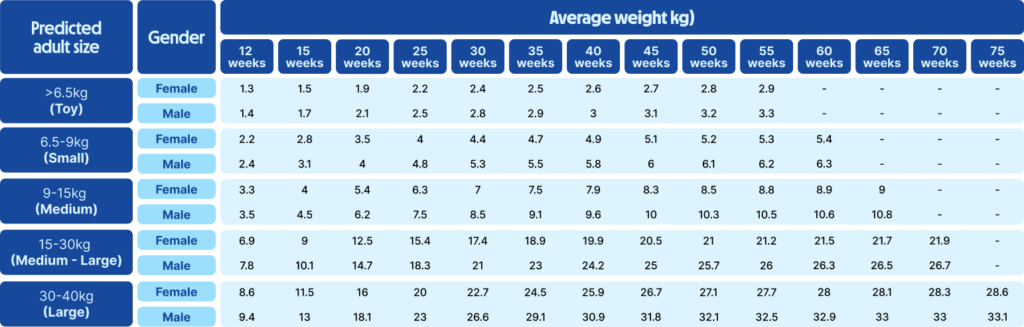
We’ve used data from the Waltham Petcare Science Institute’s helpful puppy growth charts [5] to create a simple table you can use to check your puppy’s growth progress over time. This chart shows the average weight of male and female puppies in different size categories at 5 week intervals. Don’t be worried if your puppy doesn’t hit these exact benchmarks – these measurements are based on the 50th centile for each size of dog, meaning that 50% of puppies in each category will be below the given weight and 50% will be above it.
This average figure shouldn’t be thought of as a goal weight. If your puppy is bigger or smaller than the 50th centile weight at these ages, you can estimate their predicted growth using Waltham’s detailed charts. What’s most important is that your puppy’s growth continues at a healthy rate – not too fast, and not unexpectedly slowing down or stopping either.
The rate at which puppies grow depends on lots of factors, but this chart demonstrates the way that for all breed sizes, growth is faster when they’re only a couple of months old. Growth gradually slows down, with smaller breeds reaching their adult size sooner – as you can see, larger breeds can keep growing for well over a year.
This chart based on Waltham’s data doesn’t include giant breeds of dog, as their growth patterns are different to small, medium or even large dogs. If you have a giant breed puppy like a Great Dane, the best source of information on how big they should be at certain ages will be your vet. Whatever breed your puppy is, if you have any concerns or questions about their growth, you should chat to your vet as your first port of call.
How much should my puppy weigh right now? (By breed size)
As you can see, it’s normal for male dogs to be slightly larger than female dogs, and this rings true at every stage of their development. However, that’s not to say that male puppies will always be bigger.
There’s also quite a wide range of variation in what size your puppy should be. For instance, using Waltham’s data again [6], at 50 weeks, a puppy who is predicted to grow to 9-15 kg could be as small as 3 kg, as large as 16 kg or anywhere in between. This includes all sizes from the 0.4th centile up to the 99.6th centile. However, bear in mind that if your puppy has always been small for their age, it wouldn’t be normal for them to put on so much weight that they become big for their age, especially if this happens quickly.
If you have a toy or small breed puppy, they will tend to grow more quickly and reach their predicted adult size of under 6.5 kg within a year. Medium breeds will grow a little bit slower and take longer to reach their full size.
Large and giant breeds will take the longest to reach their adult size. Just take another look at the chart above, and you’ll see that at 60 and 65 weeks old, large breed puppies are likely to be still growing. Bearing this in mind, it’s important not to overfeed them – just because they’re going to get very big as adults doesn’t mean they have to get there quickly! In fact, it’s much healthier for these puppies to grow at a slow and steady pace. I’ll go into more detail on why later in this article.
Visual health check: the Body Condition Score
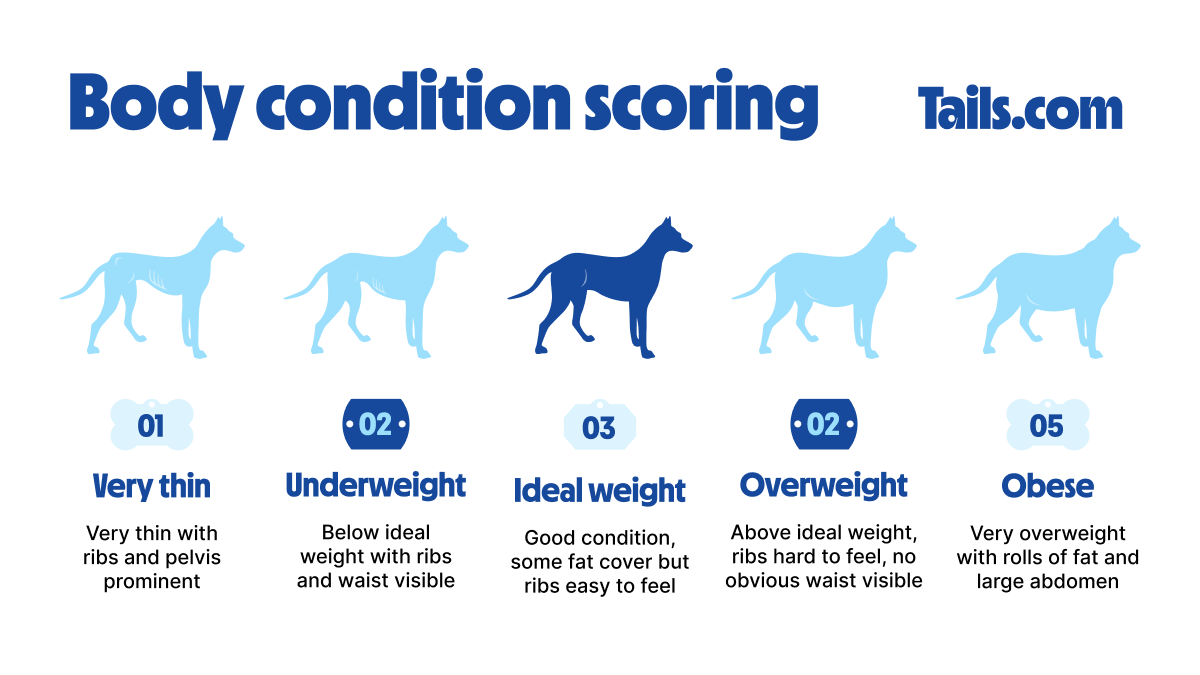
The first step is to check if your puppy is at their ideal weight. A rough guideline to follow is what’s called the ‘Body Condition Score’. This test shows you where your dog sits on a scale of 1-5, with 1 being very thin, and 5 being obese. However, it’s important to remember this isn’t always as accurate for puppies, since their body composition is a lot different to grown-up dogs. So definitely take it with a pinch of salt if you’re using it for a young dog. Here’s how to use it.
You should take note of the 3 key areas across the tummy, ribs and waist, to give your puppy their score. And if your puppy sits in the ideal weight category, you should see and feel:
- An hourglass figure when looking at your puppy from overhead.
- The tummy tucks up to the groin when viewed from the side. The chest should be lower to the ground.
- Ribs that are not readily visible but easily felt when applying light pressure. However, if you have a short coated puppy like a whippet, it’s quite normal to be able to see the last rib or two if they are stretching or twisting while they play and run around.
Something that’s important to bear in mind is that roughly 50% of dogs in the UK are overweight, according to a 2024 study from UK Pet Food. [7]. With more dogs at a higher than ideal weight, this can lead people to worry that their pets are too thin in comparison, when they’re in fact at a perfect weight. Ideally, dogs should be on the lean side whatever their age, to help them stay healthy throughout their lives.
Puppies grow rapidly, so it’s a good idea to check in with your vet every 2-4 weeks. They’ll weigh your puppy each time and carry out the body condition score test to help you and your pup stay on the right track.
What causes puppies to be underweight or overweight?
There are a few reasons why puppies might not be their ideal weight – one is just that during rapid growth phases, their calorie needs can change, and their body condition can fluctuate. While they shouldn’t be losing weight as they grow, they might sometimes look skinnier.
Their diet is a major factor: eating the wrong amount, or eating a diet that isn’t correctly balanced for their dietary needs could cause a puppy to be overweight or underweight.
Puppies’ weights will also vary a lot depending on their breed, and in addition to some dogs naturally growing to reach a larger size than others, some breeds are more likely to be overweight or obese. These breeds include Boxers, Rottweilers, German Shepherds and Labradors (a quarter of this last breed have a mutation of the gene pro-opiomelanocortin (POMC) which controls appetite). [8]
There may also be a medical reason behind their weight. Worms and intestinal parasites can cause dogs to be underweight, while some conditions like thyroid or other hormone problems can lead to weight gain, although these aren’t common. Hypothyroidism is much more likely to develop in middle aged dogs.
Signs your puppy is under-/overweight
People sometimes think it’s better for a puppy to be a bit “chunky”, but really, puppies should be lean. One key reason for this is that puppies who are overweight have been proven to be more likely to become overweight adults. [9]
Below I’ve put together a quick overview of signs that your puppy might not be at their ideal weight and that their diet may need to be adjusted. If you’re a Tails.com customer, and a vet has confirmed that your puppy is either underweight or overweight, you can update your dog’s profile to let us know – we’ll change how much food we send you in our next delivery.
| Signs your puppy might be overweight | Signs your puppy might be underweight |
| The shape of their waist is hard to see | Ribs are clearly visible without touching |
| Fat pads over the hips | Lethargy |
| Difficulty grooming | Dull coat |
How diet affects puppy weight & growth
The food you give your puppy can have a big impact on how they grow, and how much weight they put on. Choosing a food that’s formulated for growing puppies is crucial. Puppies need food that’s made just for them rather than for adult dogs, as they need a different breakdown of vitamins and minerals, as well as higher amounts of protein and healthy fat to help them grow.
Of course, the right amount of food is key as well. Too much food can lead to the puppy putting on too much weight, which, as well as increasing the risk of adulthood obesity, can put pressure on growing joints. Larger breeds, who are more likely to experience joint issues, need to stay a suitable weight as puppies in order to protect their bones and joints as they grow. In contrast, underfeeding might affect puppies’ growth and the development of a healthy immune system.
While puppies need a different balance of vitamins and minerals to adult dogs, it’s not advised to give them supplements. Instead, they should get everything they need from a complete and balanced diet. Puppy food will contain these ingredients in the right proportions, and supplements are less safe. For instance, puppies who are given too much calcium compared to phosphorus can develop skeletal problems, especially large breeds.
How to keep your puppy at a healthy weight
To help make sure your little pup grows up into a healthy, happy adult dog, it’s important to keep them at a suitable weight – here are my tips.
What and how much to feed
All puppies need a complete and balanced diet to support healthy growth. This is important because what you feed and how much can affect your puppy’s development, and can sometimes even affect their behaviour.
The amount you feed your puppy will depend on their weight, breed and age. And usually, the bigger your dog is going to be when they’re an adult, the more they’ll need to eat as a puppy. There’s no hard and fast rule here as every dog is different. Getting the right food for your puppy’s breed and age is a good first step in keeping your puppy at a healthy weight. A good rule of thumb is to follow the recommendations on the packet, and consult your vet for further advice if you’re unsure.
As your puppy grows, they should be eating bigger portions. At Tails.com, our clever Adaptive Nutrition system responds automatically to key milestones as your puppy grows up. This means we’ll send larger amounts of food, and the balance of nutrients will also shift over time to suit their changing needs as they mature.
If you and your vet notice your puppy starting to put on too much weight, try reducing the amount you’re feeding. If they start to lose weight, add a bit more to their bowl at meal times. And if you’re still having trouble with your pup’s feeding routine, we have a fantastic nutrition team here on hand to help!
When to feed your puppy
Puppies usually need to eat more often than adult dogs to keep their energy levels stable throughout the day. Smaller meals are also more manageable for tiny stomachs. Very young puppies up to around 4 months of age need to eat 3-4 meals a day. Then, as your puppy grows, you can drop this down to twice a day. To make it simple, just measure out the entire amount your puppy should eat in a single day, then divide it up into the right number of smaller meals. Keeping a consistent routine will help you spot any changes in your puppy’s appetite, which can be an important indicator of their health.
| Age | Ideal number of meals |
| Under 4 months | 3-4 meals a day |
| 4-10 months | Transition from 3 to 2 meals a day |
| Adult | 2 meals a day |
Exercise & activity
People sometimes worry about how much exercise they should give their puppy. In the past it was thought that you should limit the time spent exercising them, especially if they’re a larger breed of dog, who can be more vulnerable to joint problems. However, the newest guidance advises that it’s not about how long you exercise for – instead, it’s about the type of exercise you do.
Guidance from Canine Arthritis Management says you should try to avoid certain types of movement to protect your puppy’s joints – sudden starts and stops, twisting and repetitive movements. And while many puppies love playing fetch, it often involves all these things. CAM recommends making sure you always warm up with gentle walking before throwing a ball, not throwing it too far and avoiding playing fetch on slippery surfaces. Mixing it up with other games like hide and seek, puzzles and scent work will help, too. [10]
Another risk factor for developing arthritis is being overweight, because of the pressure it puts on growing joints – another reason to make sure you’re not overfeeding your puppy.
How to weigh your puppy at home (and how often)
If your puppy is only a few months old, you can weigh them weekly to track their progress – as they grow, you can gradually weigh them less often. Did you know your vet can help you with this? Many vets provide a set of scales for visitors to use in the reception area, while other practices hold regular nurse clinics where you can drop in to get an expert opinion on your puppy’s progress as they grow. This can set your mind at ease if you’ve never had a puppy before and aren’t sure what to expect or how fast they should be growing. Regular vet visits also help show your pup that going there isn’t so scary.
Weighing a small breed puppy can be a little easier than weighing bigger pups. There are a couple of ways to do this. One way is to stand on the bathroom scales and note down your weight – then, weigh yourself again while holding your puppy. By subtracting the first number from the second, you’ll work out how much your puppy weighs. Alternatively, you can give your puppy a couple of treats as a reward for sitting or standing nicely on the scales by themselves. [11]
If you have a large or giant breed puppy, you might find that while at first you can pick them up easily, as they grow they can get very heavy. So while standing on the scales together might be fine at first, when your pup gets a bit older, this tactic will no longer work. Many breeds of large or giant dogs will be too big to fit on your bathroom scales by themselves too, so you’ll need access to the specialist animal scales you can find at the vets.
Every time you weigh your pup, make a note of their latest measurement, whether you’re jotting it down in a notebook or adding the info to an app on your phone. Apps have an advantage in that they can help you analyse the data over time.
When to be concerned about your puppy’s weight
While healthy puppies tend to steadily put on weight with occasional growth spurts, sometimes there’s a sign that they’re not growing at the rate they should. Here are some red flags to look out for, all of which would be a good reason to take your puppy to see the vet.
- Sudden weight loss
- No weight gain for more than two weeks (if they are less than 6 months old, when growth should be faster)
- Difficulty maintaining weight
- Pot-bellied appearance (this can be a sign of a parasitic infection like worms, which can cause gas, inflammation and blockages in the intestines)
- Excessive weight gain
- Limping combined with weight gain (particularly in larger breeds, as this can be a warning sign that their weight is putting painful stress on their growing joints)
Conclusion: helping your puppy grow at a healthy pace
Your puppy might be little now, but in what might feel like the blink of an eye they’ll reach their full size. As they grow, keep an eye on their progress and measure their weight regularly to make sure they’re on the right track – and bear in mind that you can always contact your vet if you have any concerns. Give them a complete and balanced diet formulated for puppies to set them up for a happy, healthy life.
Here at Tails.com, we can create a tailored kibble that’s the perfect blend for your pup, whatever their size, age, breed and preferences. We’ll also calculate exactly how big your puppy’s portions should be as they grow, to help you make sure they’re getting all the nutrients they need without being overfed. If you’re curious, why not fill in our two minute quiz for new customers to get started?
FAQs
What is a normal weight for a puppy?
The ideal weight for your puppy will vary depending on their age and how big they’re expected to grow as an adult. Your vet will be able to give you an accurate estimate. As well as checking their weight to make sure they’re on track, you can use the Body Condition Scoring test, looking for visual and tactile clues that point to whether your puppy’s weight is healthy.
How fast should puppies gain weight?
In general, the younger your puppy is, the faster they should grow. By the age of about 6 months, puppies’ growth tends to slow.
Why is my puppy not gaining weight?
There are several reasons why your puppy might not be putting on weight. It could be the case that they aren’t eating enough, whether that’s due to being a picky eater, stressed or in competition for food with other dogs in the household. It could also be a medical condition like worms – if you’re concerned about your puppy’s growth, weight or appearance in general, make sure you take them to your vet as soon as you can.
Should I worry if my puppy is smaller than others in the litter?
There are a few reasons why a puppy might be smaller than their littermates: it could be down to their position in their mother’s womb or their embryo being fertilised later. It might simply be because they’re from a mixed breed litter who are naturally different sizes. Sometimes in the earliest weeks of their life, puppies who are smaller than their brothers and sisters might need extra support, like help nursing or supplemental bottle feeding. However, they will often grow up to be just as healthy as their littermates.
Does neutering affect puppy growth?
Yes, neutering can affect a puppy’s growth and development, particularly for large breed dogs. Spaying or neutering your puppy shouldn’t stunt their growth, but if the procedure is carried out too soon on large or giant breed puppies, it can affect their growth plates: the areas at the ends of bones where more bone develops. If neutered too early, these growth plates will stay open longer than they should, which might cause the puppy to grow taller than they otherwise would, which can cause joint problems.
This is why vets might recommend neutering your male giant breed dog when he is two years old, or spaying your female giant breed dog when she is at least a year old or after her first heat cycle. [12] Small and medium breed dogs can be spayed or neutered sooner, between 6-8 months, following recommendations from your vet. [13]
When do puppies stop growing?
Puppies stop growing at different ages depending on their breed and what their eventual adult size will be. Small and medium size dogs might be fully grown by one year, while large and giant breed puppies might still be growing right up until they’re two years old.
Is my puppy overweight or underweight?
If you’re concerned about your puppy’s weight, your vet will be able to advise you how much they should weigh. You can use the Body Conditioning Score test to check whether your puppy is a healthy weight – if you’ve not carried out this test before, ask your vet or a friend to show you how. You’re checking how your dog’s body looks, and how it feels when you touch them on their ribs, hips and spine.
Sources
[1] ‘New puppy care: 0-7 weeks’, PetMD, 6 December 2022
[2] ‘How long should puppies stay with their mother?’, Cornell Richard P. Riney Canine Health Center
[3] ‘New puppy care: 0-7 weeks’, PetMD, 6 December 2022
[4] ‘When do dogs stop growing?’, PetMD, 20 May 2025
[5] ‘WALTHAM™ Puppy Growth Charts’, Waltham Petcare Science Institute
[6] ‘WALTHAM™ Puppy Growth Charts’, Waltham Petcare Science Institute
[7] ‘Obesity Report 2024’, UK Pet Food
[8] ‘Why fat Labradors can blame their genes’, BBC, 6 March 2024
[9] ‘Obesity in dogs: FAQ’, Blue Cross
[10] ‘Puppy guidance: caregiver handout’, Canine Arthritis
[11] ‘How to get your dog used to being weighed on the scales’, Dogs Trust
[12] ‘Assisting decision-making on age of neutering for mixed breed dogs of five weight categories: associated joint disorders and cancers’, Frontiers in Veterinary Science, 31 July 2020
[13] ‘What causes a puppy to stop growing?’, PetMD, 30 January 2018