
It’s really common for dogs to weigh a bit more than they should, but in order to help them stay healthy, the best thing to do is help them get back down to an ideal weight for their age, breed and size. This article, based on my knowledge as a nutritionist and backed up by veterinary expertise, is here to explain how you can help your dog lose weight by changing their diet. Don’t worry, it’s not about putting them on a crash diet or letting them go hungry. A good weight management plan involves paying careful attention to your dog’s calorie intake, while making sure they stay nourished and get all the healthy nutrients they need.
Key takeaways
- Switching to weight management food is often a better solution than just cutting down portion size, as these diets are designed to help dogs stay feeling full.
- As well as having lower calories, dog food for weight loss will often have some combination of the following traits: low-fat, high-fibre and high-protein.
- Weigh out your dog’s meals to make sure the portion sizes are consistent, because it can be tricky to judge by eye.
- Don’t forget about treats, as they can add a lot of calories – exercising your dog is also key to healthy weight loss.
- There are some situations where it might be especially helpful to chat with your vet about your dog’s weight, such as if they’ve put on a lot of weight, aren’t slimming down despite two weeks of an adjusted diet or have mobility issues or another health condition.
Table of contents
How weight loss dog food works
Types of dog food for weight loss
What to look for in the best dog food for weight loss
How much should I feed my dog to lose weight?
Is weight loss dog food enough on its own?
When to speak to your vet about weight loss
How weight loss dog food works
Weight management dog food designed to help them lose weight has a few key traits that make it different from other types of dog food. It will have lower calorie density and reduced fat content, and it’ll also contain more fibre to keep dogs feeling full for longer. And protein is important too, to make sure that as your dog loses weight, they hold onto the muscle mass they need to stay strong and healthy. [1]
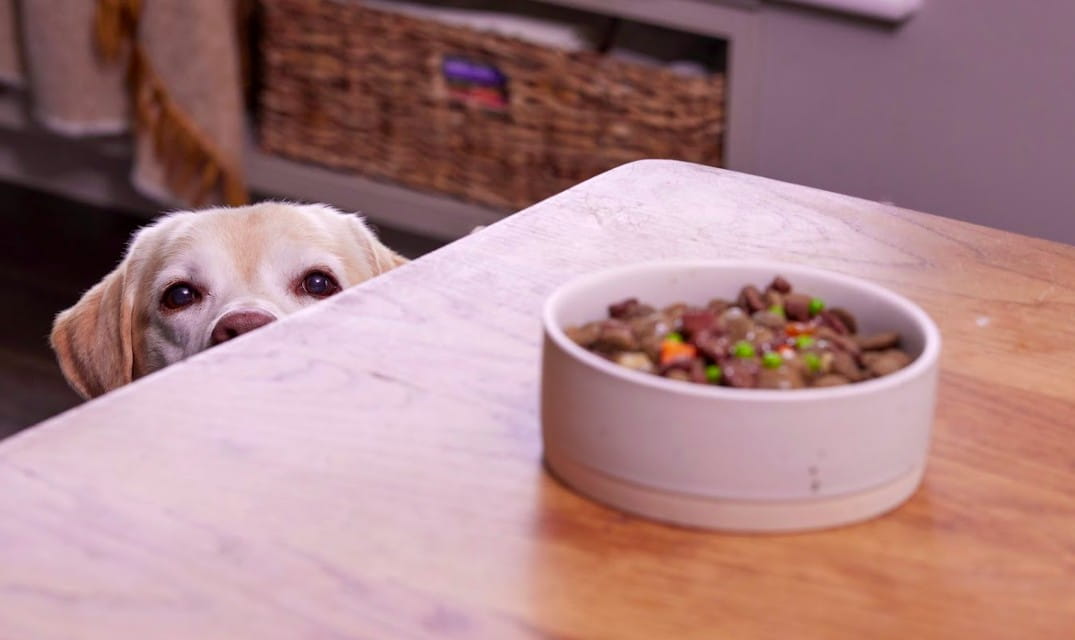
It’s usually not enough to just give your dog a smaller amount of their usual food, especially if they need to lose quite a bit of weight. That can leave them feeling hungry, leading to behaviour like “counter surfing” (stealing food off your kitchen counters) and scavenging in your bins or out and about on walks. Giving your dog their usual food but in smaller quantities can also mean they don’t get the right breakdown of important vitamins and minerals.
Types of dog food for weight loss
There are a number of types of weight management food available that work in different ways.
Low-fat dog food
These foods are often lower in calories because of the low-fat ingredients they contain. This type of dog food is best for dogs who are slightly overweight, as well as dogs who have medical reasons for needing low-fat food, for instance if they have ever been diagnosed with pancreatitis. [2]
High-fibre/weight-management dog food
A high-fibre diet helps keep dogs feeling full for longer, which helps stop them begging for food or scavenging. This type of food has a number of other benefits for many dogs, like helping to support a healthy gut.
Vet-recommended weight-loss diets
Sometimes vets might recommend a very specialist diet, especially in the cases of dogs who are very overweight or in some cases obese and need some extra help getting back to their ideal weight. These special foods are also sometimes given to diabetic dogs. These weight control foods might have a different nutritional breakdown to other foods designed to help dogs lose weight – for instance, they’re often much higher in fibre, with up to 20% fibre content.
If you think your dog might benefit from one of these diets, your vet will be happy to help advise you on what to feed your dog, based on their specific needs. You can also reach out to the expert Tails.com nutrition team any time.
What to look for in the best dog food for weight loss
So if you’re shopping for a weight management food for your dog, here’s what to look for:
- Calorie content per portion: Ideally, the calorie content should be lower than a typical food. Your vet will be able to advise you on your dog’s ideal weight and how many calories you should give your dog per day (this should be based on their target weight). There’s also a helpful calorie counter for dogs on the UK Pet Food website. [3]
- Fat percentage: Food designed to help dogs lose weight is lower in fat. For instance, to be classed as low-fat, dry dog food should typically contain no more than 10% fat on a dry matter basis (which means measuring the nutritional content of the food not counting water).
- Fibre: Many weight management foods contain a higher amount of fibre, to help dogs stay feeling full for longer, slowing digestion and even helping prevent as much fat being absorbed, in the case of soluble fibre. Here at Tails.com, one of the healthy, natural ingredients we use in many of our blends is beet pulp, which is a great source of both soluble and insoluble fibre.
Protein: Look at the protein sources as well as the protein content. In order to help keep the fat content down, dog weight loss food might contain leaner, less fatty meats like chicken, fish or plant-based proteins. These types of food are also often a little higher in protein than standard dog food, to help make sure dogs hold on to their healthy muscle mass while they lose weight. - “Complete and balanced”: All dog food, including food for weight control, should be labelled “complete and balanced”. This means that it contains all the nutrients dogs need, in the right quantities, meaning that it could form the entirety of their diet. This doesn’t mean that you can’t reward them with a treat on top of their meals – just that you can have peace of mind, knowing your dog’s getting everything they need to support their health.
How much should I feed my dog to lose weight?
Knowing how much to feed your dog can be a challenge, especially when they give you the puppy dog eyes or act like they haven’t been fed in years only an hour or two after they’ve had a meal! The right amount of food for your dog should be based on their ideal or target weight, not on how much they weigh right now, if that’s higher or lower than what it should be.
Portion control and giving your dog a little less food should help gradually bring their weight down. You could even mix a little water into your dog’s dry food so they don’t feel like they’re getting a much smaller meal.
Use your kitchen scales to adjust portion sizes when measuring out your dog’s food – it’s much more consistent than just eyeballing it, and means that if different family members are feeding the dog, they’ll always give the right amount.
If you’re a customer at Tails.com, just let us know that your dog is overweight and how much weight they need to lose, and we’ll reduce the size of the portions we send you. Your vet will be able to advise you on what your dog should weigh, based on their breed, age and size.
As well as weighing your dog’s meals, make sure that you weigh your dog too, to track their progress – there are lots of handy apps that can create graphs to make it easier to visualise. If your pup’s a bit too big to weigh on your bathroom scales, your vet’s office is very likely to have a free set of scales for you to use.
Is weight loss dog food enough on its own?
Giving your dog the best food to support their weight loss is very important, but there’s lots of other things to consider too. Just cutting down the size of your dog’s meals and changing their diet to a weight management food might not be enough.
One thing that’s quite easy to overlook is treats – they’re only little, but they can be very calorific, especially high-fat foods like pieces of cheese. When planning your dog’s daily calorie allowance (which your vet or a Tails.com nutrition team member can help you with) you’ll need to remember to factor in treats. Don’t feel like you have to cut out treats entirely – our Cold-Pressed Rewards are less than 4 calories each, making them easy to fit into a balanced diet for weight loss. You can also give your dog low-fat treats like strawberries, pieces of carrot or other fruits and vegetables. [4]
Exercise is also very important for lots of reasons. It burns fat, helps maintain healthy muscle and can even help distract dogs from hunger because they’re having too much fun to think about where their next snack is coming from! When encouraging your dog to be more active, little and often is the best way to go, especially with puppies and older dogs who both benefit from gentle exercise to protect their joints. [5]
You should also make sure that everyone in your household knows that your dog needs to lose weight, and is aware of what they can do to help. Everyone should know how big their portions should be, how many treats they’re allowed and any changes to their daily exercise.
When to speak to your vet about weight loss
Don’t feel worried about getting in touch with your vet if you’d like to ask them about your dog’s weight – it’s a very common issue and they’ll be able to give you lots of good advice. You can make an appointment any time, or ask in passing when you bring your dog in for a routine treatment like vaccine boosters, but here are the situations when it might be an especially good idea to bring your pup in.
- Your dog has gained a significant amount of weight, or you’re aware that they are currently quite overweight or even obese, according to their weight or their body condition score. Weight gain can be a symptom of a health condition or contribute to a higher risk of developing a health issue, so it’s always good to get your dog checked out. [6]
- You’ve changed your dog’s diet to weight management food and/or reduced portion sizes but their weight hasn’t improved – you should be able to see changes within two weeks of a new diet.
- If your dog has mobility issues or health conditions, you might need extra help and advice from your vet. For instance, if your dog is having difficulty moving around, maybe because of issues with their joints, taking them for longer walks won’t be the best tactic. Instead, your vet might be able to recommend somewhere where you can take them swimming, which is a wonderful form of low-impact exercise.
- Lastly, one more reason to contact your vet is to find out if your dog needs a specialised therapeutic diet. It could be that they should be given a very specific type of food in order to help them lose weight and tackle any related health conditions they might have.
Choosing the right dog food for healthy weight loss
I hope this article has made supporting your dog’s healthy weight loss a little less daunting. Perhaps the most important thing to remember is that slow, steady weight loss is best, so don’t be disheartened if they’re not making progress as fast as you expected.
Of course, the right diet for any dog is one that’s based on their specific needs – a Great Dane who should lose a few pounds will need a different diet than a medium sized dog like a spaniel. But for any type of dog who would benefit from losing weight, the right food will help reduce their calorie intake while making sure they feel full and nourished, and are getting all the vitamins and minerals they need. If you’re wondering if Tails.com could help your dog get to their ideal weight, please do try our two minute quiz for new customers, and we’ll let you know what diet we’d recommend for them.
FAQs
What is the best dog food for weight loss?
The best weight management dog food is one that’s perfect for your dog – what’s their age and size, and do they have any health conditions that need support? Aside from this, weight control dog food should have lower calories and potentially lower fat, more protein and more fibre, depending on your dog’s needs.
Is low-fat dog food good for weight loss?
Yes, low-fat dog food can really help as part of an overweight dog’s diet and exercise regime. Low-fat food might include different sources of protein, such as fish, lean meat like chicken or plant-based sources like pulses.
Do dogs need a veterinary diet to lose weight?
Not necessarily. These foods contain a much higher amount of fibre, and sometimes also contain special ingredients that influence the metabolism, helping dogs burn more fat. They help lots of dogs lose weight safely, but many dogs also do really well on low-fat food or any diet that’s designed for weight management, without being classed as a veterinary or therapeutic diet.
How long does it take for dogs to lose weight?
Weight loss should be gentle rather than rapid, but if you don’t start seeing results within two weeks of changing your dog’s diet and exercise regime, it’s time to ask your vet for some support and advice.
Can weight loss dog food be fed long-term?
Yes, some dogs can really benefit from staying on a weight management diet long-term to help them stay lean, especially if they’re prone to weight gain. You just might need to adjust portion sizes to make sure they just stay trim rather than losing too much weight.
For instance, my 11 year old Staffordshire Bull Terrier gained a bit of weight when we got a puppy, because when we were training the puppy with treats, he wanted (and got!) some too. So I started giving him weight loss food to help him get back on track, and I still give him this now because it helps him stay at his ideal weight. He’s quite greedy, but it’s so filling that it keeps him satisfied, which is another benefit!
Does grain-free dog food help with weight loss?
Neither grain-free or grain-inclusive diets are automatically better for weight management. At Tails.com, all our blends are tailored to each individual dog – if your dog needs to lose weight and is also sensitive or allergic to grains, we can work out the perfect blend for them.
Sources
[1] ‘Weight loss and high-protein, high-fiber diet consumption impact blood metabolite profiles, body composition, voluntary physical activity, fecal microbiota, and fecal metabolites of adult dogs’, Journal of Animal Science, 30 December 2021
[2] ‘Nutritional management of pancreatitis and concurrent disease in dogs and cats’, Journal of the American Veterinary Medical Association, 3 April 2024
[3] ‘Calorie counter for dogs’, UK Pet Food
[4] ‘Diet and nutrition for dogs’, Dogs Trust
[5] ‘Obesity in dogs: FAQ’, Blue Cross
[6] ‘Why is my dog gaining weight?’, Fetch by WebMD, 25 July 2025